Define one question and one boundary
A six-week plan needs a question small enough to investigate within the available sessions. In an illustrative plant-classifier project, the question might be whether images from different lighting conditions change the output. The boundary could be a private demonstration using non-sensitive photographs. Write what the project will not attempt, such as plant-health advice or public deployment. This makes the scope easier to discuss and gives the learner a coherent piece of work to own. The following sequence is an editable planning example, not a prediction of what any learner will achieve.
Use the first two sessions to establish the core
Session one can explore the question, existing skills and suitable examples. The learner and mentor can agree categories and keep a small set of unfamiliar examples aside for testing. Session two can build or inspect the simplest working version. Label the scaffold, downloaded components and AI suggestions so that “working” does not imply everything was learner-written. Between-session work should be explicit and proportionate: a small set of observations may be more useful than an open-ended instruction to improve the project. Confirm the adult time and permitted tools before assigning independent work.
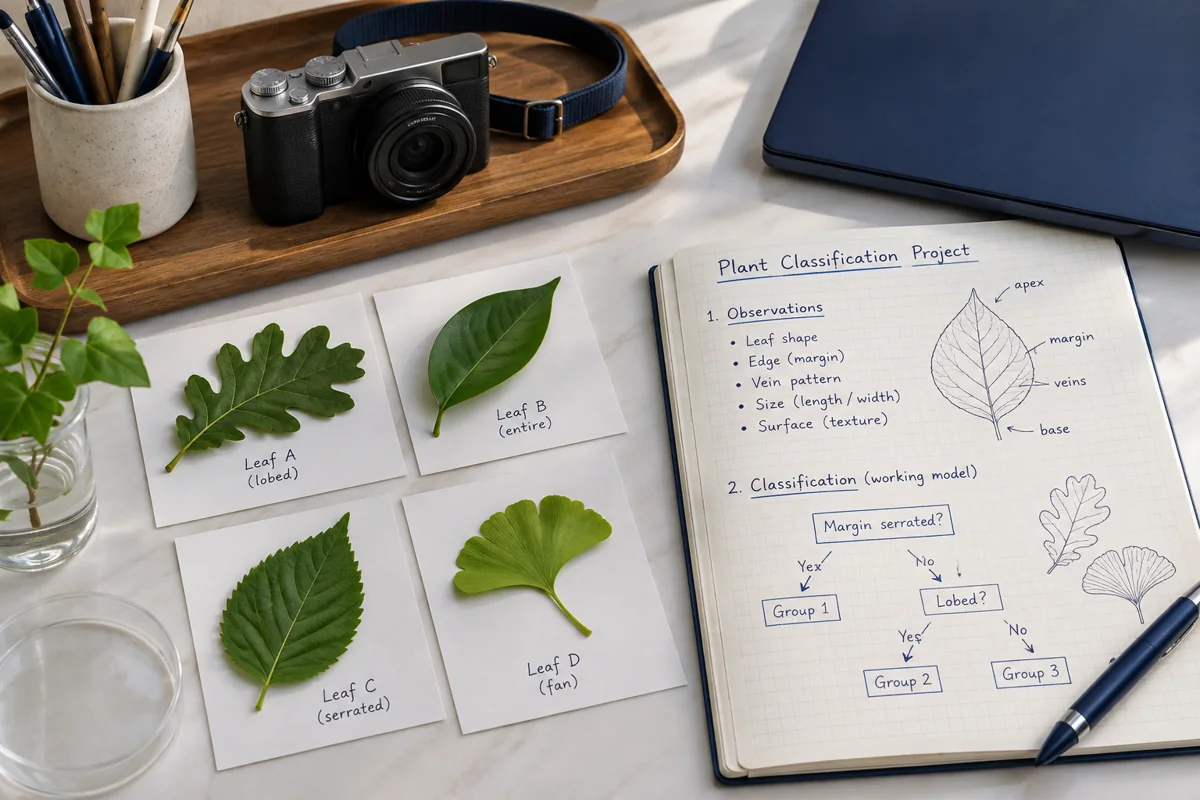
A manageable project leaves room to build, test and reflect.
- 01Define the scope
- 02Test a small change
- 03Review the learning
Use the middle sessions to investigate
Session three can examine errors: which examples fail, what might explain the pattern and which explanations remain guesses? Session four can change one requirement, such as low-light photographs, and compare the behaviour. Keep observations separate from conclusions. A different output is not automatically an improvement, and a successful example does not establish general reliability. Give the learner room to propose a test and describe what it would show. The mentor’s role is to scaffold a manageable investigation without quietly replacing it with a polished demonstration.
Finish with explanation and a bounded next version
Session five can rebuild or modify one small component. Session six can produce a brief README: purpose, dependencies, usage, limitations and contributions. Ask the learner to explain one choice and one remaining uncertainty in their own language. The final artifact might be modest; the explanation is part of the result. Review whether to continue, change scope or pause. Record optional extensions separately and estimate the additional lessons, household effort and permissions they require. A public release is a new decision with its own data, account and cost questions, not an automatic reward for finishing the private version.
Sources and limitations
Editorial decision guidance, not an assessment of an individual learner or provider. No lessons were observed. Linked sources provide context, not endorsement of Learning Prospect.
Source review: 18 November 2026. Provider terms can change. Read our methodology.